Recently Viewed ›
Recently Downloaded 
Close x
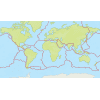
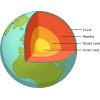
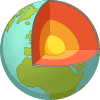
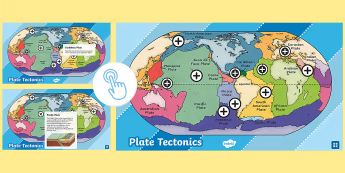
The Earth’s surface is called the crust. It is made up of different rocky sections called tectonic plates, which fit together like a puzzle covering earth.
Tectonic plates are located all over the world. They cover the Earth’s inner layers and act as a sort of shell below the ground and the sea. The plates that are below the continents (land) are known as continental plates. The plates that are covered by the ocean are called oceanic plates. These are thinner and heavier.
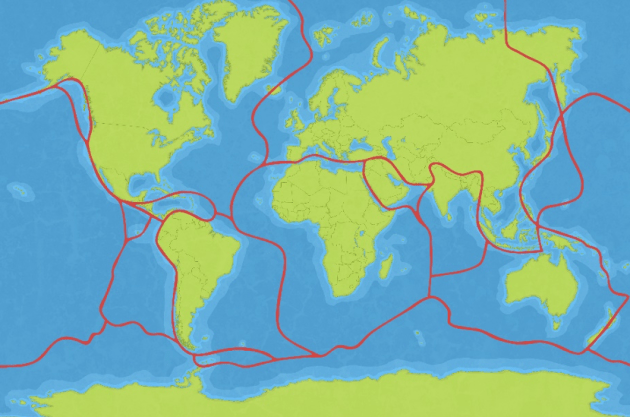
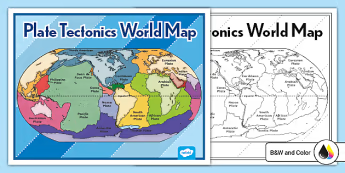
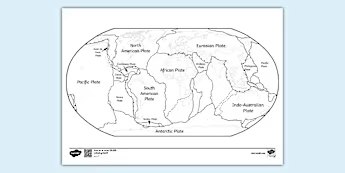
There are seven major tectonic plates that cover most of the Earth and have an area of more than 20 million km². These are the African, Antarctic, Eurasian, North American, South American, Indo-Australian, and Pacific Plates. Alongside the seven major plates, there are also a range of minor tectonic plates. These are smaller plates that have an area of between 1 million km² and 20 million km².
The largest tectonic plate on Earth is the Pacific plate, stretching almost 103,000,000 square kilometres.
The smallest tectonic plate is the Juan de Fuca Plate, at approximately 250,000 square kilometres.
Tectonic plates can move about on the softer mantle underneath them. This is because the heat from the inner layers of the Earth’s is melting the mantle that the tectonic plates sit on. A way that you can visualise this happening for yourself is to take an ice cube and place it on a dinner plate. As the heat of the dinner plate melts the ice, it slides around. This is like tectonic plates moving on the Earth’s soft mantle layer.
The plates can move towards each other, away from each another, or rub against each other. On average, they move at a rate of about 1 to 10 cm every year. This is too slow for us to feel them move, but we can see the results over the course of millions of years.
The slowest moving plate is The Arctic Ridge, which moves less than 2.5 cm each year. The fastest moving is the East Pacific Rise in the South Pacific Ocean, which moves at a rate of more than 15 cm per year.
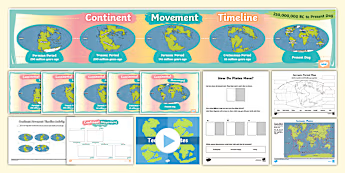
In 1910, a German scientist called Alfred Wegener, was the first to study the idea that the continents might have once been a single landmass. However, it wasn’t until 20 years after Wegener died, that geologists realised he was right. The continents and ocean floors really do “float” on moving rock plates, and have been drifting for millions of years. This is called continental drift.
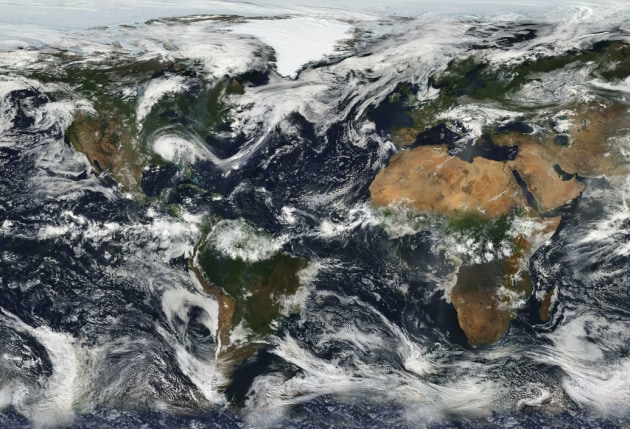
Wegener discovered that 250 million years ago, all the land on Earth was one large landmass. This was named Pangaea. The tectonic plates started to split around 200 million years ago, splitting Pangaea into two landmasses - Laurasia and Gondwanaland. During the Jurassic period 145 million years ago, the continents we know today were starting to become visible as the tectonic plates moved even more.
We know that the tectonic plates are still moving between 1 and 10 cm each year. So, what effect will this have on the continents in the future? Will they have changed? Well, currently:
Based on this, what do you think the landmasses on Earth will look like 50 million years from now?
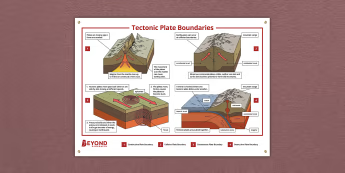
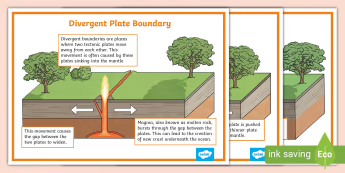
Although tectonic plates move at a rate of only a few centimetres per year, when they collide with force it can have a huge effect on our planet. As the plates bump into each others, it causes a lot of movement and friction. This can result in the creation of mountains, volcanoes, earthquakes and tsunamis.
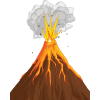
A volcano is formed when two tectonic plates collide, and the heavier plate slides below the lighter plate into the Earth’s mantle.
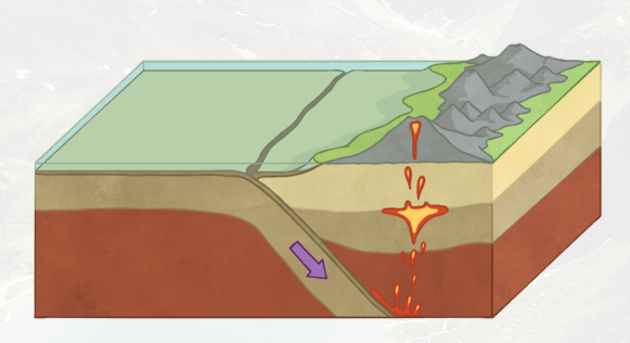
Deep in the Earth, it is extremely hot. It is so hot, in fact, that rocks actually melt and form a hot liquid known as magma. As the heavier plate slides underneath the lighter one, it disappears into the Earth’s hot mantle and melts. The force of the plate causes the magma to leak out onto the surface of Earth, forming the volcano. As magma leaks out, it cools and forms into rock. Over time, as more magma erupts out of the volcano it creates more rock, increasing the size of the volcano each time it erupts.
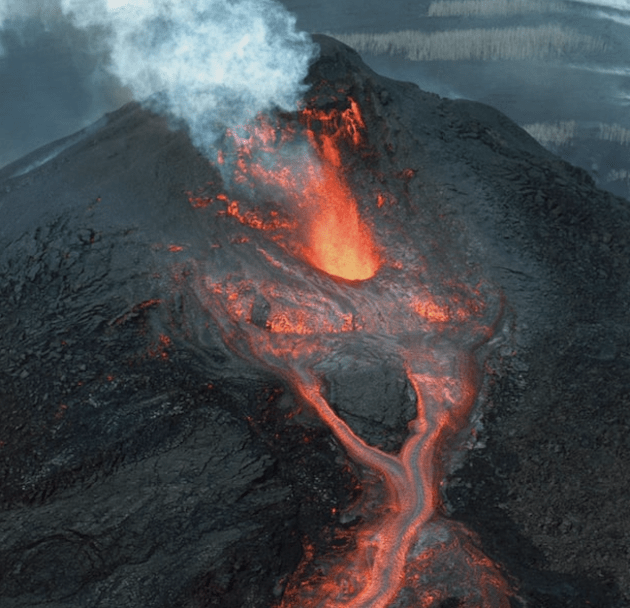
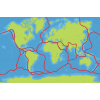
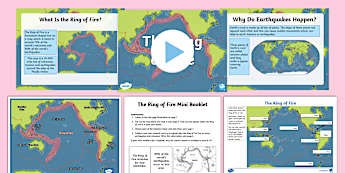
There is one place on Earth where volcanoes are most common, known as The Ring of Fire. It’s a horse-shoe shaped line located around the edge of the Pacific Ocean, spanning 25,000 miles. The Ring of Fire is home to at least 452 volcanoes, which is around 75% of all volcanoes on the planet. around 90% of the world’s earthquakes.
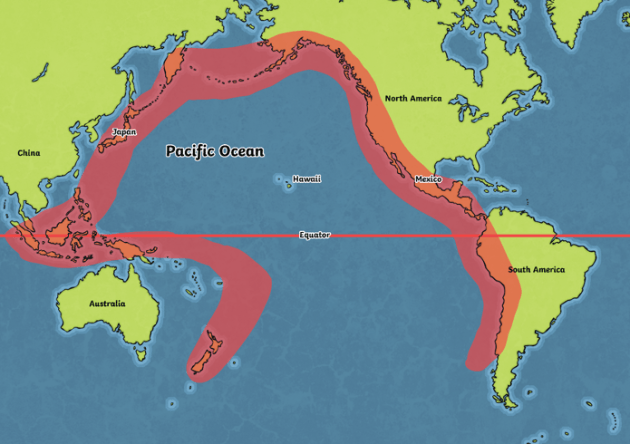
The Ring of Fire is not only home to most of the world’s volcanoes, but around 90% of the world’s earthquakes happen here too.
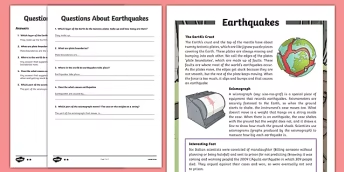
The edges of tectonic plates are called ‘plate boundaries’, which are made up of faults. These faults are where most of the world’s earthquakes occur. Here is a map sowing earthquake hotspots around the world:
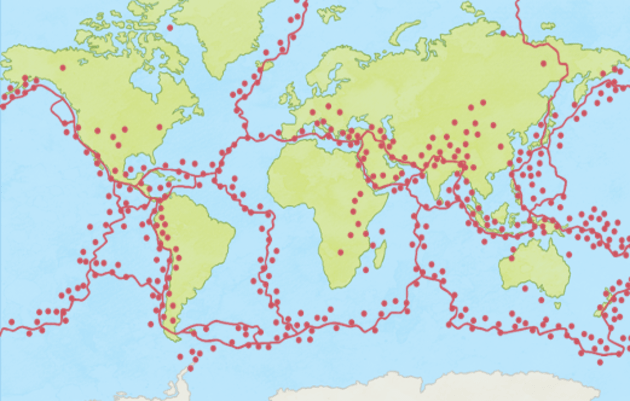
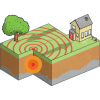
So, how do earthquakes actually happen? Well, two tectonic plates that glide past one another can collide and get stuck because the edges (or the ‘plate boundaries’ aren’t smooth). Despite the plates being stuck, they still move, causing a huge amount of force. When the force is too much, the plates slip and bump, causing the land above to move and shake. This is known as an earthquake.
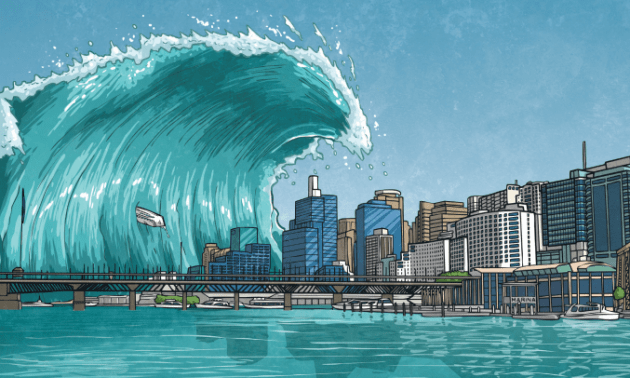
Earthquakes don’t just happen on continental plates. They can also occur when oceanic plates collide and the heavier plate gets stuck beneath the lighter plate. Eventually, the tension causes the heavier plate to release, causing an earthquake beneath the ocean floor. This then produces a tsunami.
Volcanic eruptions and ocean floor landslides can also cause tsunamis. If one of these forces a lift or a drop in the tectonic plates, it causes water to displace and move quickly through the ocean.
Are you looking for engaging resources to teach your class all about tectonic plates this term? Or, perhaps you’d like some fun activities to do with your own children at home. No matter the reason, we’re here to help with our range of fantastic teacher-made resources to answer the question: What are tectonic plates?
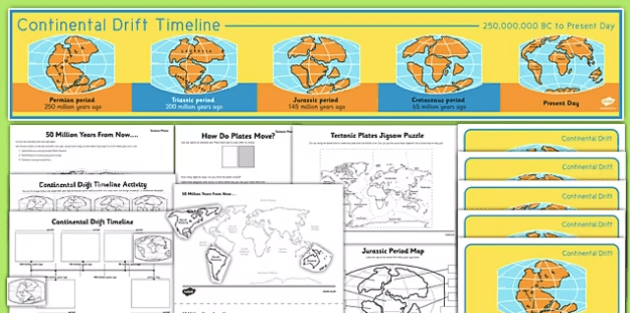
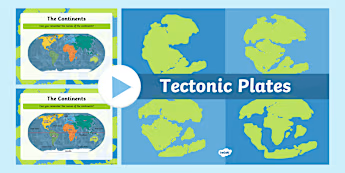
First, why not use our Tectonic Plates PowerPoint Presentation to introduce children to the topic? This explains in child-friendly language how tectonic plates have shifted over the last 250 million years, and how the continents we know today were formed.
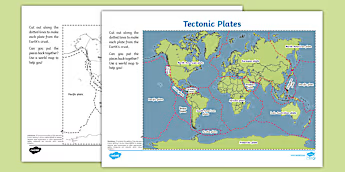
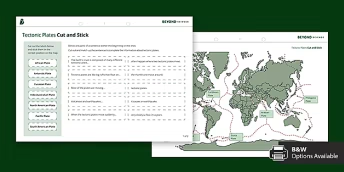
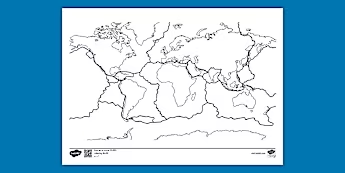
Consolidate this learning by challenging children to complete their very own Tectonic Plates Puzzle. Can they cut out each plate from the Earth’s crust, and put the pieces back together correctly? Encourage children to use a world map to help them out! This not only develops their understanding of the different tectonic plates, but also improves their map reading skills.
Finally, test your children’s understanding of how tectonic plates move with our fun Continental Drift Worksheet. Can they use the facts written on the sheet to show where the continents might be in 50 million years from now?
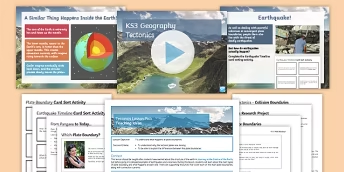
You can also download our comprehensive Tectonic Plates Teaching Pack, full of everything you need to teach a great lesson on tectonic plates. Download in just the click of a button to find display materials, written activities, worksheets and much more.